 |
|||||||||||||||||||||||||||||||||||||||||||||||||||||||||||||||||||||||||||
Dear Gardener, These top-quality vegetables and fruits coming from your backyard not only taste terrific, but do wonders for your health. Hundreds of studies world-wide draw the same conclusion: people who eat the most vegetablesand fruits have lower rates of cancer, heart disease, and other chronic ills than those who eat the least. Discoveries of powerful disease- fighting compounds in vegetables and fruits are making headlines all the time. You’ve been reading those headlines, and asking us about the nutritional content of vegetables and fruits. In response to a huge volume of requests, we’re introducing the Rainbow Garden. This simple, clear approach to garden planning allows you to take advantage of the latest nutrition discoveries. You’ll wind up with a garden that gives you the full complement of protective vegetables and fruits. Happy-and-healthful-gardening! Yours, George Ball, Jr. Chairman and Chief Executive Officer W. Atlee Burpee |
|||||||||||||||||||||||||||||||||||||||||||||||||||||||||||||||||||||||||||
| Click on a link below to go directly to the color category you prefer. GREEN: They are top-notch sources of Lutein and Zeaxanthin, compounds linked to protection from eye disease. Many of these foods are also rich in beta-carotene, folic acid and minerals. DEEP YELLOW/ORANGE-FLESHED: Their beautiful color comes courtesy of Beta-carotene, the antioxidant linked to decreased risk of cancer and heart disease. DEEP RED/PURPLE: Foods in this category are rich in Anthocyanins which research has shown can help prevent cancer and reduce the formation of artery-clogging plaque (a cause of heart disease). LIGHT GREEN/WHITE: Ultra-protective foods that fall under this category contain compounds which help destroy cancer-causing agents. IN A CATEGORY OF THEIR OWN: A few Burpee plants didn't fit into any of these categories, but are still nutrition powerhouses.
|
|||||||||||||||||||||||||||||||||||||||||||||||||||||||||||||||||||||||||||
| GREEN They are top-notch sources of Lutein and Zeaxanthin, compounds linked to protection from eye disease. Many of these foods are also rich in beta-carotene, folic acid and minerals. |
|||||||||||||||||||||||||||||||||||||||||||||||||||||||||||||||||||||||||||
 |
|||||||||||||||||||||||||||||||||||||||||||||||||||||||||||||||||||||||||||
|
|||||||||||||||||||||||||||||||||||||||||||||||||||||||||||||||||||||||||||
|
|||||||||||||||||||||||||||||||||||||||||||||||||||||||||||||||||||||||||||
 |
|||||||||||||||||||||||||||||||||||||||||||||||||||||||||||||||||||||||||||
|
|||||||||||||||||||||||||||||||||||||||||||||||||||||||||||||||||||||||||||
| YELLOW/ORANGE Their beautiful color comes courtesy of Beta-carotene, the antioxidant linked to decreased risk of cancer and heart disease. |
|||||||||||||||||||||||||||||||||||||||||||||||||||||||||||||||||||||||||||
|
|||||||||||||||||||||||||||||||||||||||||||||||||||||||||||||||||||||||||||
|
|||||||||||||||||||||||||||||||||||||||||||||||||||||||||||||||||||||||||||
|
|||||||||||||||||||||||||||||||||||||||||||||||||||||||||||||||||||||||||||
|
|||||||||||||||||||||||||||||||||||||||||||||||||||||||||||||||||||||||||||
|
|||||||||||||||||||||||||||||||||||||||||||||||||||||||||||||||||||||||||||
| DEEP
RED/PURPLE Foods in this category are rich in Anthocyanins which research has shown can help prevent cancer and reduce the formation of artery-clogging plaque (a cause of heart disease). |
|||||||||||||||||||||||||||||||||||||||||||||||||||||||||||||||||||||||||||
|
|||||||||||||||||||||||||||||||||||||||||||||||||||||||||||||||||||||||||||
|
|||||||||||||||||||||||||||||||||||||||||||||||||||||||||||||||||||||||||||
|
|||||||||||||||||||||||||||||||||||||||||||||||||||||||||||||||||||||||||||
|
|||||||||||||||||||||||||||||||||||||||||||||||||||||||||||||||||||||||||||
|
|||||||||||||||||||||||||||||||||||||||||||||||||||||||||||||||||||||||||||
| BRIGHT
RED Rich in Lycopene. |
|||||||||||||||||||||||||||||||||||||||||||||||||||||||||||||||||||||||||||
|
|||||||||||||||||||||||||||||||||||||||||||||||||||||||||||||||||||||||||||
|
|||||||||||||||||||||||||||||||||||||||||||||||||||||||||||||||||||||||||||
|
|||||||||||||||||||||||||||||||||||||||||||||||||||||||||||||||||||||||||||
|
|||||||||||||||||||||||||||||||||||||||||||||||||||||||||||||||||||||||||||
|
|||||||||||||||||||||||||||||||||||||||||||||||||||||||||||||||||||||||||||
| WHITE/LIGHT
GREEN Ultra-protective foods that fall under this category contain compounds which help destroy cancer-causing agents. |
|||||||||||||||||||||||||||||||||||||||||||||||||||||||||||||||||||||||||||
|
|||||||||||||||||||||||||||||||||||||||||||||||||||||||||||||||||||||||||||
|
|||||||||||||||||||||||||||||||||||||||||||||||||||||||||||||||||||||||||||
|
|||||||||||||||||||||||||||||||||||||||||||||||||||||||||||||||||||||||||||
|
|||||||||||||||||||||||||||||||||||||||||||||||||||||||||||||||||||||||||||
|
|||||||||||||||||||||||||||||||||||||||||||||||||||||||||||||||||||||||||||
| IN A CATEGORY
OF THEIR OWN A few Burpee plants didn't fit into any of these categories, but are still nutrition powerhouses. |
|||||||||||||||||||||||||||||||||||||||||||||||||||||||||||||||||||||||||||
|
|||||||||||||||||||||||||||||||||||||||||||||||||||||||||||||||||||||||||||
|
|||||||||||||||||||||||||||||||||||||||||||||||||||||||||||||||||||||||||||
|
|||||||||||||||||||||||||||||||||||||||||||||||||||||||||||||||||||||||||||
|
|||||||||||||||||||||||||||||||||||||||||||||||||||||||||||||||||||||||||||
|
Saturday, November 12, 2011
Nutrition for Life
With winter approaching I am already dreaming of my next garden, and things I want to try in the spring. As I was looking at the burpee site I came across this great article that explains the different nutrients found in each vegetable and garden kitchen tips.


Friday, November 11, 2011
Heather's Quinoa Chili
1. Soak 3 cups beans overnight and pour off water—vary the amount of beans depending on your size of family. (Optional: You can boil the beans before you soak them to reduce even more gas and then pour off the water.) I heard it would be good idea to also soak your Quinoa at this point too, but I just threw mine in while I was cooking it—I'm still learning : )
2. Put the beans in a large pot, cover with water and cook until tender. (I like to pressure cook mine for about 15-20 minutes until they are tender). Rinse
(If you are in a hurry you can skip this step and use: 2 cans kidney beans-rinsed, 2 cans black beans-rinsed, and 1 can refried beans. This was what I used for class.)
3. Add to the beans 1-2 quarts bottled tomatoes (or you can use: 1-2 cans diced tomatoes, 1-2 cans tomato sauce, 1-2 cups water)
4. Add 1 cup Quinoa
5. Add spices to taste. (This amount makes a Medium hot chili)
2 tsp chili powder
1 tsp cumin
1/4 tsp oregano
2 chili peppers crushed up as fine as you can get it or 1 can of green chilies
4-5 shakes of tabasco sauce if you like it hot (I do not use)
6. Add a selection of your favorite veggies to taste:
2-3 carrots chopped
2-3 celery stalks chopped
1 green pepper seeded and chopped
2-3 cloves garlic minced (optional)
1-2 cups frozen corn
1-2 onions (sweet, yellow or red)
1/4 c fresh cilantro or parsley or both
chopped olives
(Optional: 1 can refried beans. I thought this sounded strange at first, but I like the flavor and texture this adds.)
Simmer 20-30 minutes on stove until veggies and Quinoa are tender. OR put in a large crock pot for 2-3 hours. At the end of cooking add 1-2 tsp of salt to taste.
Garnish with avocados and tortilla chips.
-Adapted from my mother's traditional chili recipe, and "Mexican Chili" www.favfamilyrecipes.com
Friday, October 14, 2011
october meeting: natural yeast class, grains and whole food treats
 my very first taste of my very first loaf of "natural yeast" bread. i am salivating just looking at this picture. i'm setting up some more dough tonight for a few loaves tomorrow. sigh.
 my starter, sarah.
 rising

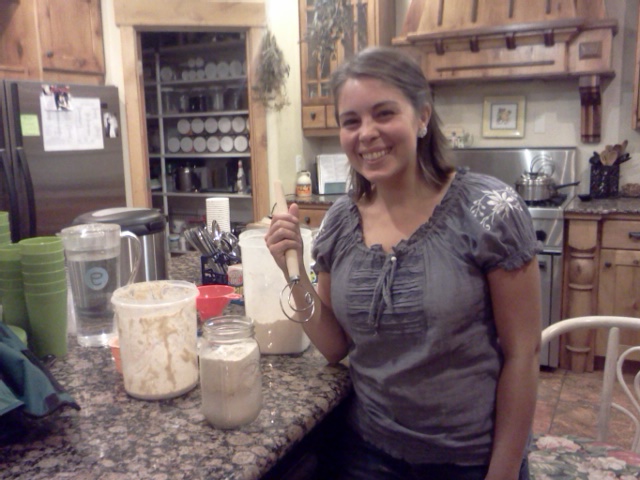 melissa "the bread geek" and her danish dough hook. what a fantastic class. thank you, thank you melissa!
 i was so happy one of my long time best friends (try 20 years) who has been following along on her own at home, was able to join our group, in person.
 a few of our awesome ladies--getting ready for our little potluck. it was so super yummy (soup, pizza, breadsticks, granola, raw chocolate and almond butter cookies, raw lemon doodles, raw peppermint and orange chocolate, fall pumpkin smoothie, fresh garden salads, bread, morning millet cereal and more). and we had about 16 people last night. awesome. thanks again for hosting ellen!
a copy of the group email invitation i sent out for melissa's class.ellen invited me to one of caleb warnock's classes (held in his garden in alpine). i was so thrilled that the first hour was about pioneer or "natural yeast." it is a subject i have been interested in for over a year--but seemed really intimidating;). the self-proclaimed "bread geek" melissa taught the class. i knew that she was possibly the cutest baker ever when she said that she had named her starts. . .Peeta and Gale. for those who are not familiar with those names. . .please, please pick up a copy of The Hunger Games by Suzanne Collins as soon as possible;). melissa is a young mom who bakes using a natural or wild yeast starter. i purchased her instruction booklet, with a few basic recipes and happily took my starter home. i really wanted to name mine peeta as well:), but i decided on "Sarah Agnes Prine" (and you must pick up a copy of These is My Words by Nancy Turner while you are picking up The Hunger Games). Sarah is a pioneer who at one point in the tale brings a starter to her friends. well, i "fed" sarah last week and followed melissa's instructions and ta-dah made two loaves of beautiful bread. when it came out perfectly i think i may have actually shed a few tears and took a few pictures. last night our family had "dinner crepes" made with natural yeast. yum, yum.not only was it doable, and super yummy but as you know there are tons of benefits of using natural yeast over commercial yeast.
the kitchen table altar

(spelt oatmeal pecan pancakes (thank you melissa!!!) with my grandpa's fresh pears that were fairly alcoholic by the time i sliced them. um, so yum. the pears melted upon contact. sigh. i'm still dreaming of my grandpa's summer peaches that i simply did not get enough of, but made some awesome ice cream with. bronwyn made the flags. . .like me, she loves to arrange the table).
the one thing that stood out to me from jamie oliver's most recent season of his "food revolution" was when he was in a home of a single dad who wanted to learn to cook and make meals for his two boys at home, rather than relying on fast food. they created a space for the kitchen table in the kitchen and jamie sat down and said, "this is the altar of your family."
i think about that statement a lot.
this week is week eight for me of meal planning. each week when i sit down to do it--i usually bring stacks of cookbooks, my recipe binders, and the ipad to look up food blogs and a blank piece of paper. i open up my fridge, see what i need to use. look at my pantry. and then begin. it is mind bending and more than a bit time-consuming. for those who have done this for years--i bow to your brilliance. why it has taken me ten years to get past the four o'clock, "what's for dinner?" i have no idea. there have been many times in the almost two months that i have wondered, "is this worth it?" this planning, and shopping, and cooking and the endless clean up of dishes. i wasn't sure that it was. but i kept trying, hoping it would get easier.
my days are busier with tons of cooking and clean up, but less stressful. we haven't made any fast food runs for a long time. which was my easy fall back. we have saved tons of money (it also helped that i started doing this during harvest time).
and yesterday, as i looked ahead to my week, i thought there just might be a corner to turn.
you know the one. when the incredibly hard new thing you are trying makes a break through of results, or ease, or enjoyment or simply habit.
we had a lovely, lovely sunday. fresh harvest cucumber pear apple juice. banana pancakes. eggs. keifr smoothies. homemade bread with homemade jam.
perhaps because it has been a year since i started taking cali's awesome classes i have been really reflective. now there is a basis of knowledge and skills and things don't seem so crazy hard. a lot of work, sure. . .but not "i don't know what to do" hard.
last night i finished compiling our nutrition group's recipes. 86 pages (if you'd like me to email them to you let me know!). and in my hands (okay under my fingertips on the computer) i had a little manual that i wish i would have had a year ago. it really represents a lot of collective work of so many awesome women. women who kept on pushing through, even when plagued with thoughts of,"'is it worth it."
yesterday, as a happy family sat down to our kitchen table altar i thought i might have heard a small whisper of, 'yes.'
and as i start the week at that same table, with another blank page and a fridge full of green peppers a pantry full of red onions and a freezer of fresh venison:), i think. . .fajitas.
. . .and it starts to get easier.
september meeting

We had a wonderful meeting last Thursday! It was probably my very favorite. As I left at 11:00, I felt filled up and inspired and so very, very grateful for all of you (and so very, very well fed).
. . .and strengthening our family's immune systems in preparation for fall:).
Here is an article from Word of Wisdom Living on immune systems
and some GREAT suggestions from Amy Jones at A World of Wisdom on "Achieving Flu-Free Winters." I learned how to make my own tinctures and capsules from Amy. I did a little demo on making your own herbal capsules--it is SO simple!
There were several things I had promised to email out that were mentioned during the group meeting and a few other great tidbits that I have found this week.
Ellen asked if Robyn had a section about rejuvelac in the chapter on preserving raw food with probiotics. She didn't. But I noticed she just talked about it on her blog.
. . .Gina did such great demo on making your own yogurt with a yogurt maker (it looks like there are several on amazon). Robyn has instructions in the 12 steps book on how to make your own in your oven. Also, Costco now sells a two-pack of 32 ounce Greek yogurt.
for $10.69. A steal.
Costco also carries a new product. it is a sprouted bean mixmade by tru-roots, the same company that makes the quinoa available at Costco. I am really excited to try this (remember all the crazy health benefits from sprouted foods talked about at our meeting a few months ago). Also, for those of you who want to give out "treats not sweets" this Halloween Costco has mini card packs and play-doh. I have been handing these out for a few years. I like to buy an extra pack and send those to school with the kids when they need to bring "treats." Here is an article about using non-food rewards and some great halloween suggestions from 100daysofrealfood.
I watched another documentary this weekend (that a friend recommended) called Fat, Sick and Nearly Dead. It is the story of a man with a rare auto-immune disease that cures it from an extended juice fast and encourages a few others who make some remarkable changes (loosing a few hundred pounds type changes). It reminded me of Cali's class last year about juice fasting. The doctor, Joel Furhman, in the documentary wrote the book that Cali recommended that was recently written about here (scroll down for the post about fasting).
Those documentaries, along with Forks Over Knives, are all available on instant Netflix.
Jeniece sent me a great website that i have been devouring. It is the blog of a family who transitioned to "real food" and theirexperiences--click here to read. I particuarly liked her tips for kids. She also has a section on "real foods on a budget." Although her diet may not look exactly like ours--the experiences of transitioning are very smiliar. She also has a great recipe section.
august meeting:

august group: outdoor dining. the recipe box pictured was my great-aunt's.
 lynett brought this yummy soup to share. it's been one of my favorites for years.
so, i'll share the recipe with you.
ingredients:
4 tablespoons butter (or olive oil)
1 pound, plus a few extra of sliced, raw carrots
1 large onion, chopped
2 quarts (8 cups) chicken broth
1 cup rice (cooked brown rice)
1/2 teaspoon curry
1/2 teaspoon ground marjoram
1 cup heavy cream (or rice milk)
1/2 tsp salt
1/2 tsp white pepper
in a large pot melt butter, add carrots and onion. cook for ten minutes on low, stirring often. add broth and rice, bring to boil. add curry and marjoram, cover and simmer one hour. puree in blender or food processor, add white pepper. put back in pot, add cream and salt (do not boil after adding cream).
serve and enjoy!
highs and lows
 at my own farmer's market
 my heirloom chinese "radish." humph.
last night at sunday dinner i suggested we play "high and low" a cute name i had recently heard from wordofwisdomliving for something we do occassionally at dinner (what was your favorite part of the day and what was your least favorite part of the day). we didn't make it all around the table last night. too busy scarfing down fajitas.
as we were leaving to come home i was in the car with the boys. davis had gotten in trouble right before we left and was declaring it "the worst day ever." sweet skyler was trying to point out all the good things about the day. "what about church?" he would ask. davis declared each of skyler's suggestions terrible. he said to me, "i couldn't even play the 'up and down' game. i didn't have any ups." it took me a minute to figure out that he meant "high and low." as tim came to the car i gave him the "listen" signal and we listened again to skyler and davis debate the terrible-ness of the day.
i have been thinking about the "highs and lows" of our nutrition transformation for weeks. perhaps it started with reading a blog about a mother who took a "100 days of real food" challenge. she chronicled her own "highs and lows." and i loved reading it because i related and part of me wished i had done the same. a certain video that hit such the sweet spot for me this week. i was at that moment of debate--wondering if it was all worth it, if i was doing the right thing and a friend sent this along. at one point while watching it i thought i might actually die--because i could not breathe. if you wonder what life looks like at home for us at times this would be it.
president uchtdorf's talk at women's conference was another sweet spot of my week. . ."these successes may seem tiny to you and they may go unnoticed by others but God notices them and they are not small to Him. . . our journey to perfection may be long but we can find wonder and delight, but we can find wonder and delight in even the tiniest of steps in that journey." "forget-me-not."
last week i attended a class on "pioneer yeast" in a beautiful backyard garden. i have been feeding my start, named sarah agnes prine, all week. i prepared the dough last night and woke up this morning to put it in pans and let it rise (hoping for warm bread before the kids leave for the bus). as i was shaping the loaves i thought of how impossible this would have once seemed for me. the entire thing would have been overwhelming and i perhaps would have been in tears. but i had made a goal, now it's been a few years, to bake my own bread. it was a bumpy road. i tried many recipes. i bought a wheat grinder (that broke more than once). i bought beautiful cast iron pans. my first loaves (that i made with wheat ground in a hand grinder) were bricks and the "flour" was no where near smooth. but it was warm and somewhat edible and i couldn't give up after my arms were sore from wheat grinding. . . as i looked around my kitchen i saw my "keifr" and my wheat sprouts and my tea kettle and my blender and essential oils and i've learned a lot this year.
have there been tears?
of course.
does skyler ask for candy at every house we visit?
yes.
will i forget the moment that davis found out there was BREAKFAST at school--and it was chocolate milk, go-gurts, and cold cereal and BEGGed for it even though we had watched jamie oliver's food revolution and forks over knives?
no.
did i give davis 1.50 to eat it?
yes.
every day?
no. just once.
did i worry a little bit that the toxic load of artifical flavors, dyes, and sugars might kill him.
will you think i'm crazy if i say yes?
do i worry that my kids will have some sort of emotional complex because they drink kale before school?
yes.
did skyler hug three cups of keifr smoothie to his chest yesterday?
yes.
have i cried over dinner?
yes.
has my family?
yes.
do i worry about the impact i have talking to my children about what is in their food?
yes.
have my children made other children cry when they have told them what is in their food?
yes.
have i not eaten things i have wanted to?
yes.
have i eaten things i have not wanted to?
a lot.
have i felt incredibly stupid and embarassed in social situations about my food choices?
yes.
do i feel judged?
yes.
have i felt empowered and inspired and uplifted with other moms making the same choices?
yes.
has my body felt awesome and have i seen some amazing miracles with my family and others, simply through food?
yes. yes. yes.
have i felt angry and frustrated about the amount of treats, candy and food coupons that come home from school?
yes.
have i felt every so grateful for the small stash of suckers the bishop and his sweet wife have for skyler, so he can stop by any time?
you bet.
have i felt like a "super massive failure" at times?
yes.
have i cried when davis snuck down past 11:00 to ask for a piece of my homemade bread?
almost.
several weeks ago i almost tore up a third of my garden. while everyone else seemed to be enjoying the harvest from their gardens, my radishes were thinner than twine. my tomato plants had not produced one juicy red fruit. my kale was small. and i had but one zucchini. yes, that is unheard of. i joked with my family that i had produced a $500 zucchinni. the cost of our garden boxes, composter, soil and seeds. all of that for a measly zucchini. i laughed about the size of my radishes and my brother asked me to take a picture (with something to show the scale). i think he thought that perhaps i was exaggerating.
i went to my garden and started to tear out tomato plants. i couldn't bear to look at my failure anymore, let alone waste my time watering it. i tore out one. i went for the second. and there i saw it. just one little lone fruit on the back of the plant.
and i decided not to give up.
but to re-double my efforts in the last weeks of the season. to fertilize twice a week, as my dad suggested. to water more deeply. to be patient.
and i got a few more zucchini. and kale. and tiny tomatoes and more chard (that tastes like dirt) that i know what do with. but i keep the chard around because it looks beautiful and its doing better than anything else out there.
and i look at those tiny yellow pear tomatoes and look at the calendar and say a little prayer and dance around them at midnight during the full moon, you know, just in case.
highs and lows.
and little steps.
and waiting for the harvest.
and you know what.
when i took out my loaves of bread. they were perfect. i sliced into one. i was home all alone. i placed it on a beautiful plate and sat down and took an expectant bite.
did i cry?
yes.
because it was so good.
and it worked.
the very first time.
Subscribe to:
Posts (Atom)
